OnPagePilot product documentation and guides.
What each part of OnPagePilot does and how to use it.
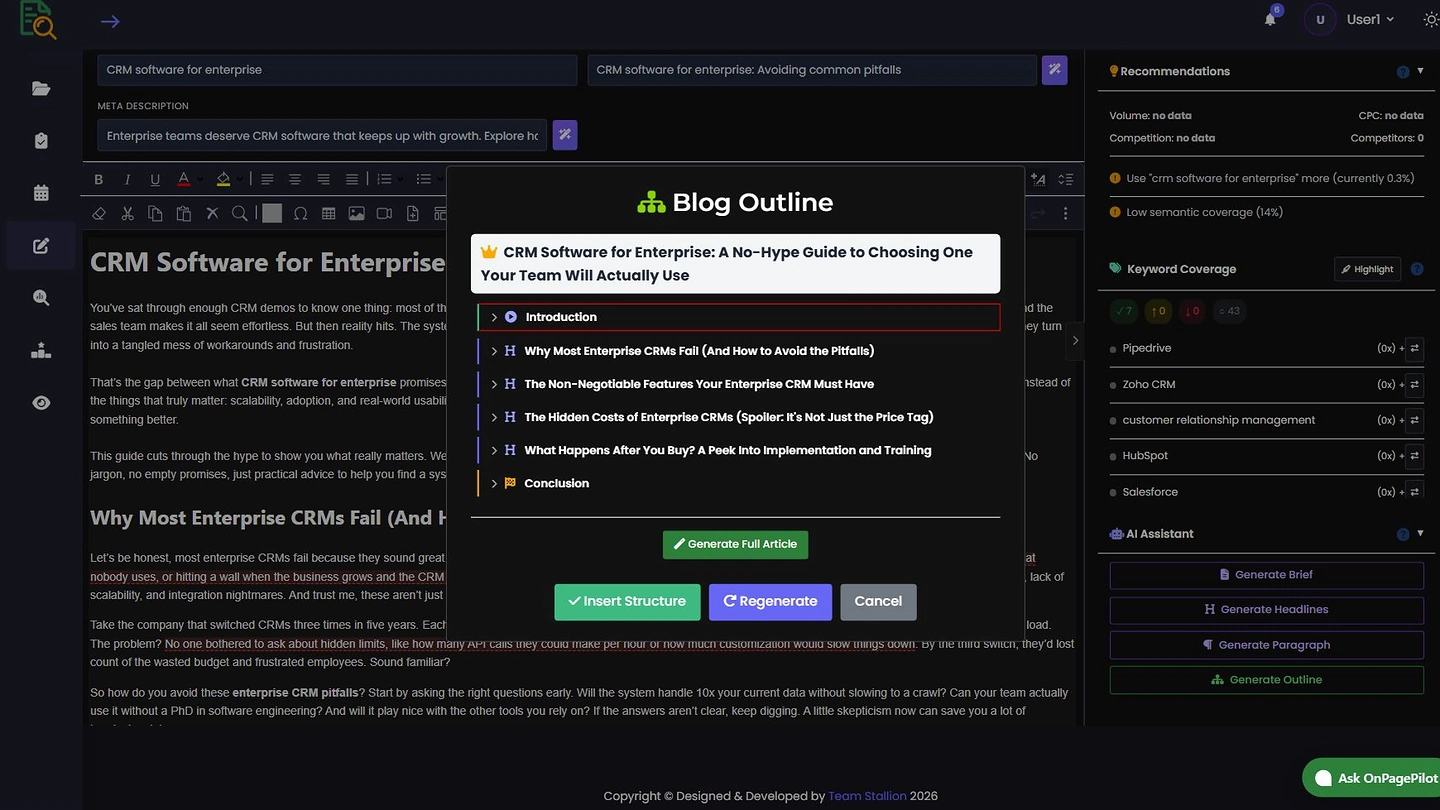
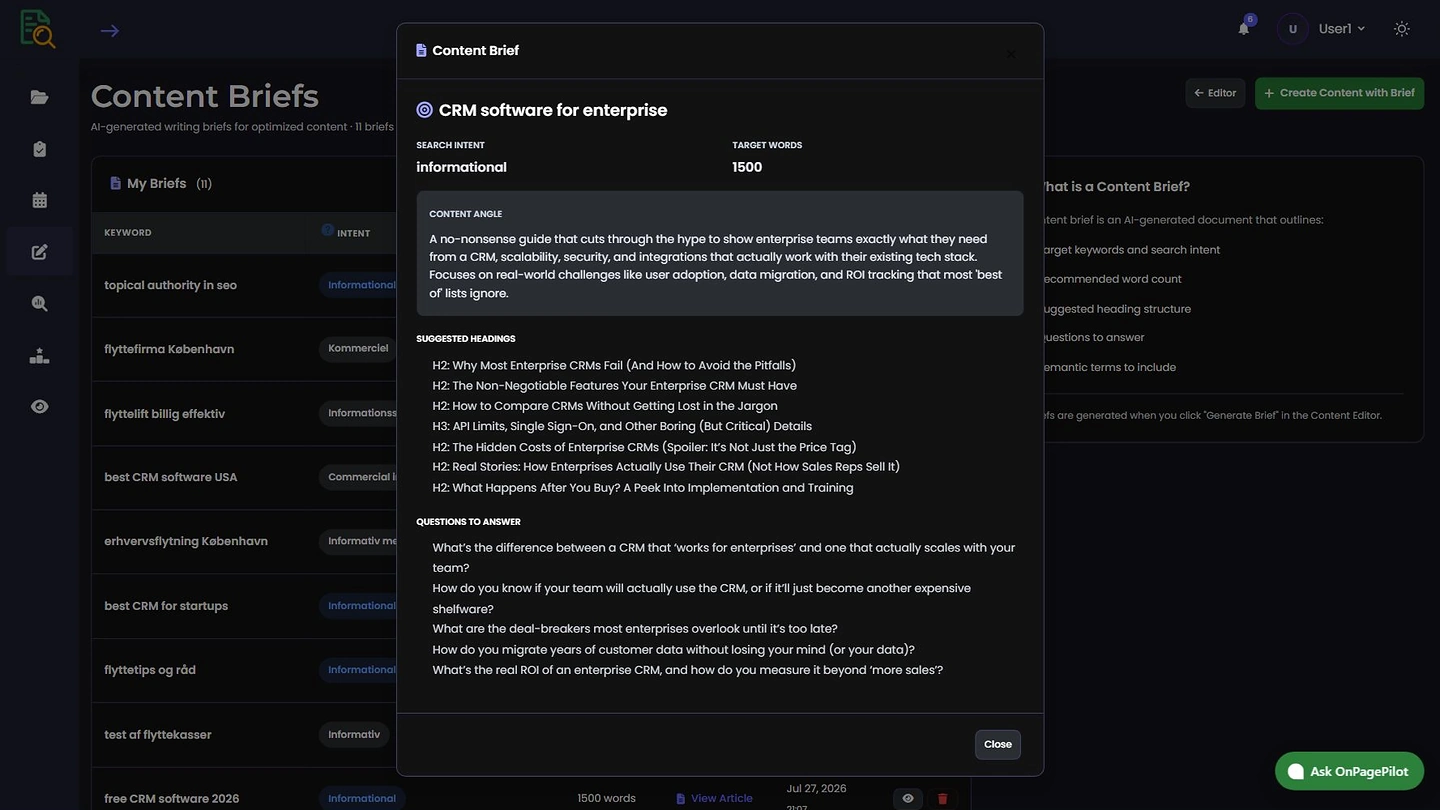
Outline first, then a full article generated section by section - each section regenerable on its own, in a voice you define.
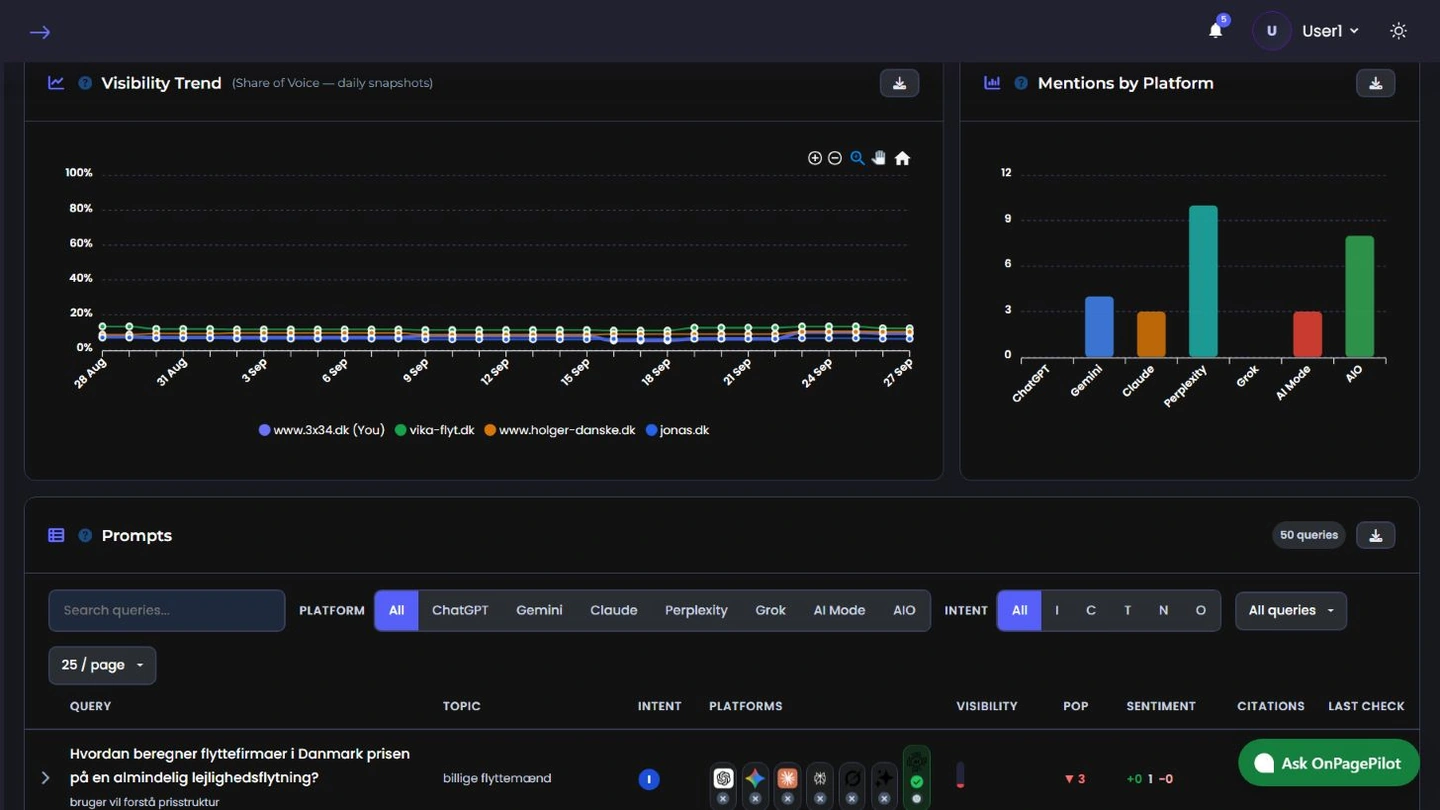
See how your brand is cited inside AI answers - ChatGPT, Gemini, Claude, Perplexity, Grok, Google AI Mode and AI Overviews - next to your competitors.
A live editor that scores content, term coverage and SEO as you write - against a brief built from your own competitor data.
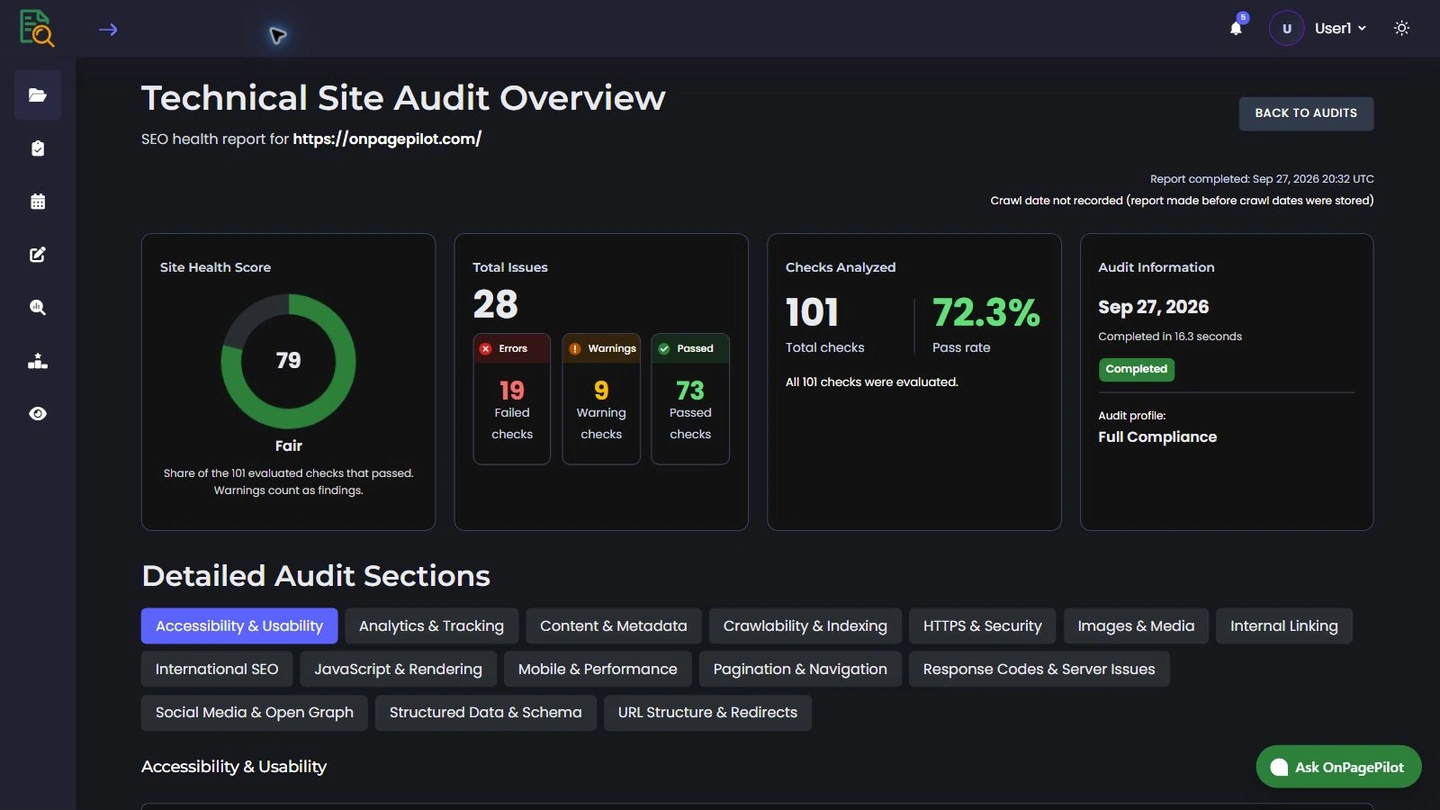
A crawl-based audit across 17 check families, with AI fix suggestions written for the platform you actually run.
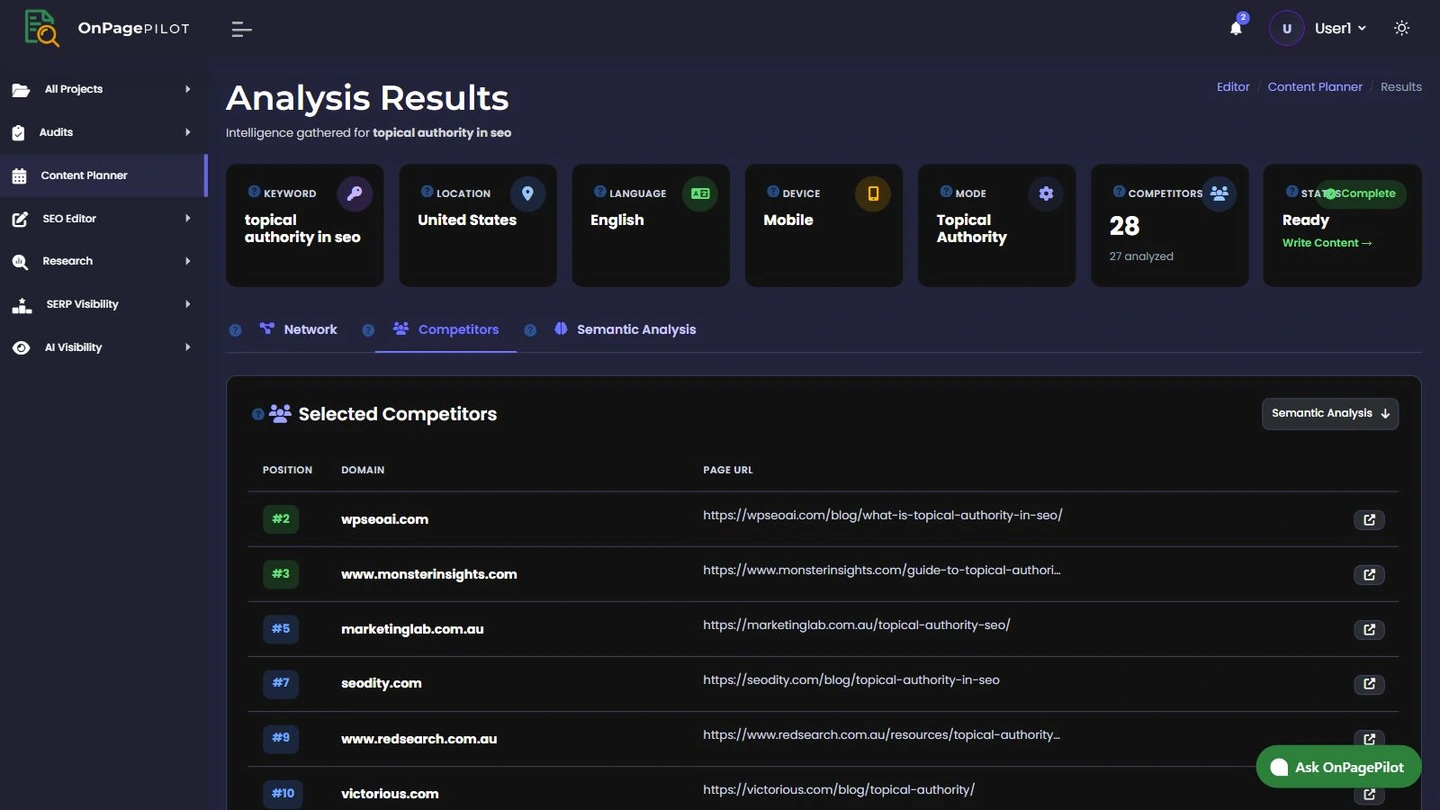
Build the pillar page and the supporting cluster your competitors already rank with - from the pages that rank, not from a keyword list.
Answers grouped by feature and by topic.
Frequently asked questions about AI Writing in OnPagePilot.
Frequently asked questions about LLM Visibility in OnPagePilot.
Frequently asked questions about the SEO Editor in OnPagePilot.
What the 12-month price lock means for your subscription.
Everything you need to know about joining the OnPagePilot beta program.
The practical questions about OnPagePilot, answered before you decide.
Everything you need to know about our pricing and plans.
AI security and enterprise compliance questions, answered.
Frequently asked questions about Technical Audit in OnPagePilot.
Frequently asked questions about Topical Authority in OnPagePilot.
Step-by-step guides and methodology.
How AI Writing drafts from the brief: outline first, section by section with per-section regenerate, templates for the shape and personas for the voice.
What a brand persona is, the five system voices, what each persona field does, and how to write a persona that makes AI Writing sound like your brand.
What a content template is, the ten built-in shapes with their word, heading and image targets, what a template contains, and how to pick the right one.
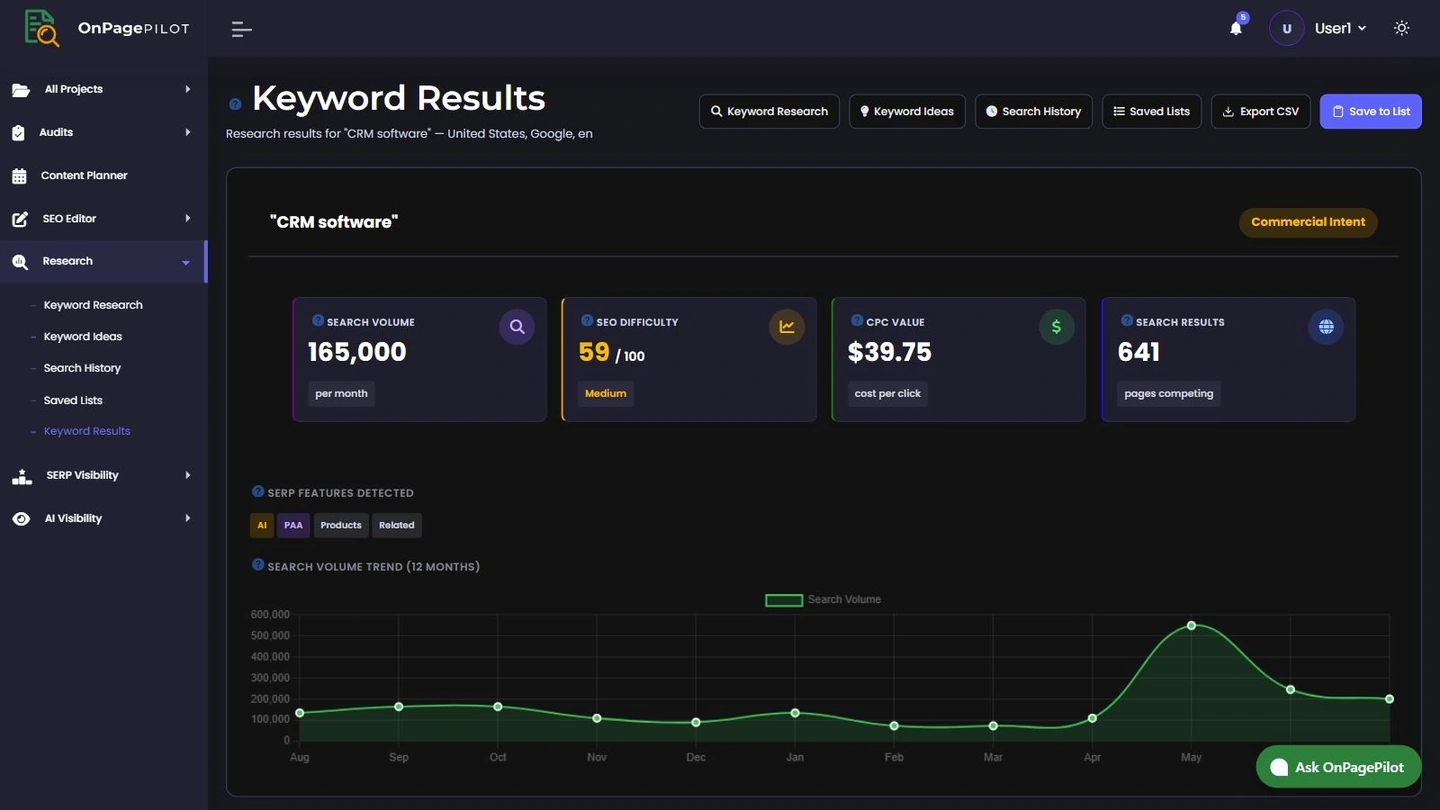
How to run keyword research in OnPagePilot: the search form, reading intent, volume, difficulty and SERP features, the related and question tabs, and where the list goes next.
What LLM visibility is, how OnPagePilot tracks your brand across seven AI surfaces with daily share-of-voice history, and how to read the citations to move the number.
How OnPagePilot protects its AI features: the 22-layer guardrail pipeline, how we red-team our own guards on every release, and how every verdict is measured.
How the SEO Editor turns a Topical Authority brief into a page: the brief, the three live scores, internal-link suggestions and the hand-off to AI Writing.
How the Technical Audit detects your stack, what its 17 check families cover, and how each issue becomes a fix a developer can ship.
What topical authority is, why it decides both rankings and AI citations, and how OnPagePilot builds it from the pages that already rank.
In-depth articles on SEO, GEO and the platform.
Manual QA is effective for targeted checks but cannot keep pace with large sites or rapid release cycles. Automated detection solves this by evaluating pages continuously and flagging issues instantly. OnPagePilot automates the repetitive monitoring work — catching broken links, missing elements, regressions, and anomalies — which reduces QA workload and dramatically speeds up detection. Automation doesn’t replace QA engineers; it strengthens their workflow by surfacing problems early, before they reach production.
Manual QA is valuable for complex, targeted validation, but it can’t scale to thousands of pages or fast release cycles. Automated systems fill that gap by monitoring continuously and flagging issues without human review. OnPagePilot automates the repetitive QA workload — monitoring, detection, and alerting — while leaving nuanced evaluation to human engineers. The combination of automated detection and human validation creates a more resilient, scalable QA workflow.
Enterprise sites change constantly, and every deployment or CMS update can introduce regressions. Continuous monitoring removes the delay between cause and detection. OnPagePilot gives teams ongoing, real‑time visibility into a site’s technical state. Instead of waiting for periodic audits, it sends immediate alerts when something breaks or deviates from expected behavior. This reduces downtime, strengthens stability, and enables a proactive technical SEO workflow.
Real‑time diagnostics evaluate a website continuously rather than at fixed intervals. Each page is assessed as it loads, and any deviation from expected technical behavior is flagged immediately.
OnPagePilot delivers real‑time diagnostics, automated issue detection, and continuous technical QA built specifically for enterprise‑scale websites. It supports high‑change environments and large architectures by monitoring pages continuously and flagging regressions the moment they occur. For organizations that cannot afford blind spots, it provides reliable, automated, always‑on technical assurance.
OnPagePilot integrates directly with the tools SEO and engineering teams already rely on, enabling alerting, workflow automation, and seamless data sharing. By connecting real‑time diagnostics to existing processes, teams can react faster and maintain a consistent technical QA workflow. Integrations ensure that the right people receive the right insights at the right moment.
OnPagePilot’s pricing is built for organizations that need continuous monitoring and automated issue detection rather than occasional audits. Plans scale with site size and complexity, giving both mid‑size and enterprise teams real‑time visibility into their technical SEO health. The model reflects the platform’s focus on automation, stability, and always‑on diagnostics, not scheduled crawls or one‑off checks.
Core idea: OnPagePilot replaces periodic SEO crawls with continuous, real‑time diagnostics, so problems are discovered the moment they occur rather than hours or days later. How it differs from traditional crawlers: Traditional crawlers run on schedules (daily/weekly/monthly) and provide point‑in‑time audits; OnPagePilot provides ongoing technical assurance and immediate visibility into regressions. Primary benefits: faster detection, instant visibility of issues, and continuous monitoring for regressions; traditional crawlers remain useful for broad, periodic audits.
Scheduled crawls only offer periodic snapshots, which can miss short‑lived regressions and delay detection. Real‑time diagnostics act as a live feed, catching issues the moment they occur — even between deployments or outside working hours. For teams that need uninterrupted visibility, OnPagePilot’s real‑time approach provides a far more reliable and responsive alternative.
OnPagePilot AI‑powered SEO & GEO platforms maintain a site’s technical health through continuous, real‑time evaluation rather than scheduled crawls. They detect issues the moment they occur, eliminating the blind spots and delays inherent in weekly or monthly audits. OnPagePilot embodies this model: it monitors every page continuously, flags regressions instantly, and delivers structured insights that help teams keep large sites stable. This automation shortens detection time, prevents minor issues from escalating, and replaces reactive QA workflows with continuous technical assurance suited for enterprise environments.
OnPagePilot is an AI‑powered SEO & GEO platform that delivers real‑time diagnostics, automated issue detection, and continuous technical QA. Instead of relying on scheduled crawls or manual checks, it monitors websites continuously and identifies issues the moment they appear. The platform gives teams structured, immediate visibility into a site’s technical health, making it ideal for organizations that need reliable, automated oversight at scale.
Practical posts on on-page SEO and AI search.

Search engines stopped counting words in 2013 - and modern AI engines like ChatGPT, Perplexity, and Gemini never counted them at all. This article traces Google's decade-long shift from word-matching to meaning (Panda, Hummingbird, RankBrain, BERT, MUM), explains embeddings and semantic search in plain language, and reveals the counterintuitive truth: keyword stuffing doesn't just fail with AI - it actively makes your pages harder to cite. The piece breaks down query fan-out, why visibility is now measured in AI citations rather than rankings, and why the real problem isn't keywords themselves but how they're sold as orphaned lists. It closes with a five-step system for weaving keyword research into topic clusters, internal linking, and citation tracking - the approach OnPagePilot is built around.
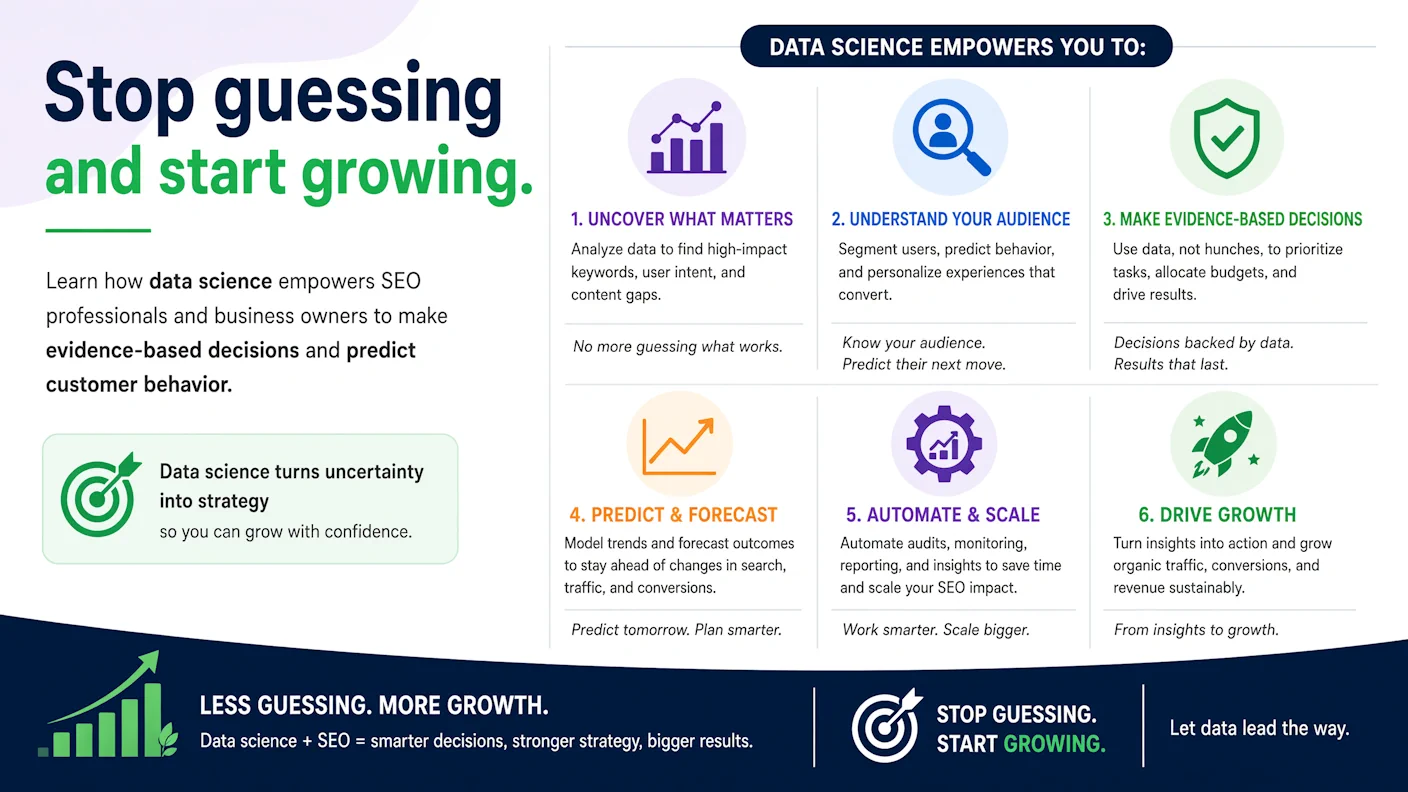
The article discusses why data science is crucial in 2026, citing the expanding global data science platform market. It details the four pillars of data analysis: descriptive, diagnostic, predictive, and prescriptive. The post explains how machine learning powers modern SEO tools, using OnPagePilot's screen overlay classification model built with ML.NET and TensorFlow as a real-world example to ensure data quality. It outlines the data science process, including data collection, cleaning, exploratory analysis, modeling, and interpretation, and lists key tools and technologies. The article also touches on practical applications of data science beyond SEO, such as fraud detection and recommendation systems, and describes the evolving role of data scientists. It concludes by offering guidance on getting started with data science fundamentals and applying them to real business problems.
Guardrails AI is an open-source Python framework that adds runtime safety to LLM applications through composable input and output validation. This article explains how the framework works, explores its Hub-based validator ecosystem for PII detection, toxic language filtering, hallucination prevention, and jailbreak defense, and examines why runtime guardrails have become essential for EU AI Act compliance and NIST AI RMF alignment in 2026.
The guide covers why on-page SEO matters in 2026, distinguishing it from off-page and technical SEO. It details core elements such as search intent alignment, title tags, meta descriptions, header structure, content quality, keyword placement, URL structure, internal linking, image optimization, and structured data. The page also discusses page experience, Core Web Vitals (LCP, INP, CLS), and how OnPagePilot automates on-page SEO analysis using machine learning. It further addresses optimization for AI search engines and common on-page SEO mistakes, concluding with a practical checklist for 2026.
How the OnPagePilot bot crawls and how to control it.
Information about the OnPagePilot web crawler. Learn about our bot's behavior, user-agent, crawl policies, and how to control crawling on your website.
Pick a plan and put all five features to work on your own domain — search rankings and AI visibility, measured in one place.